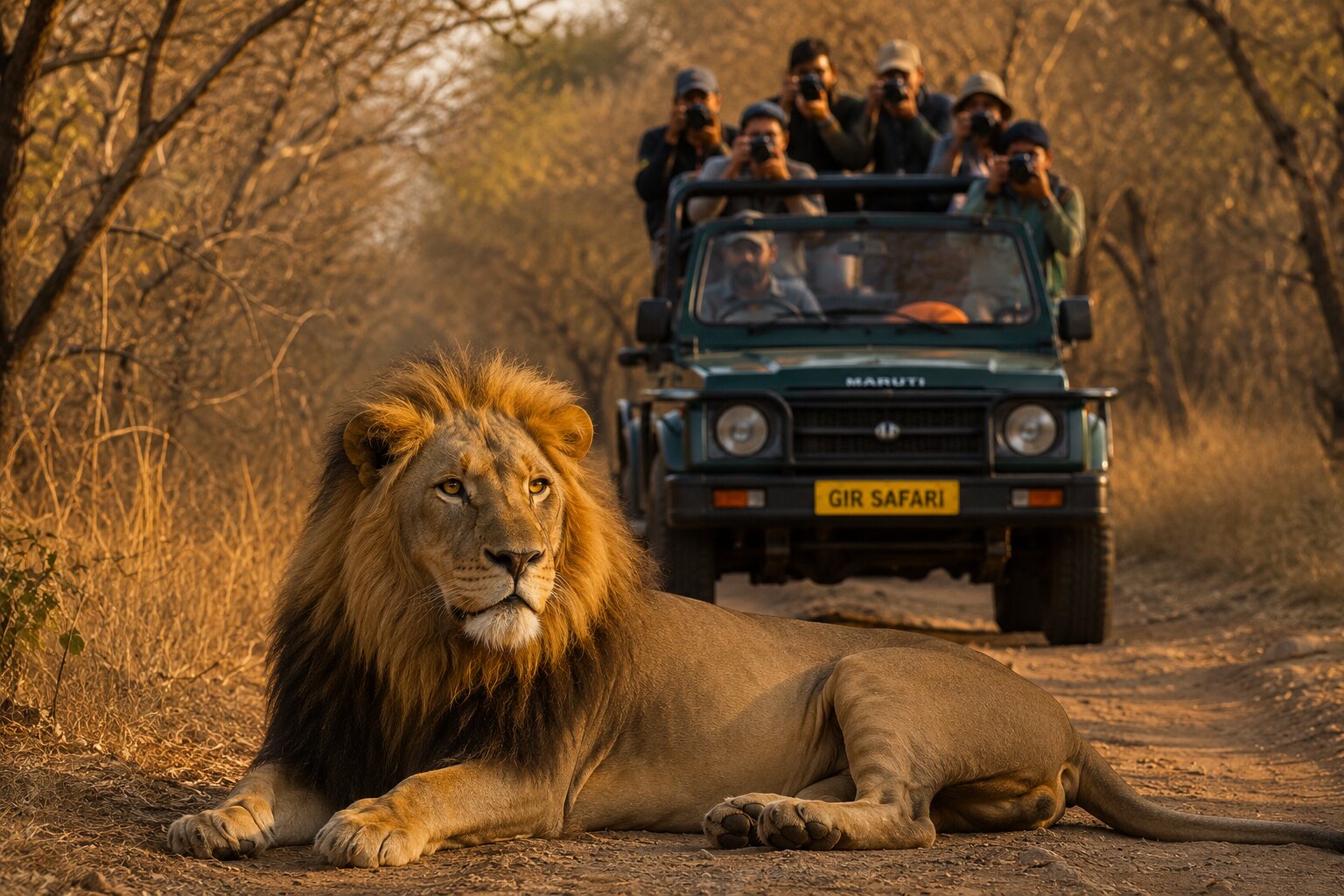
Wildlife photography is more than just clicking a camera — it is about capturing the soul of the wild, freezing fleeting moments that reflect nature's beauty, power, and mystery. Gir National Park, the only home of the majestic Asiatic lion, is a paradise for photographers both amateur enthusiasts and seasoned professionals. With its diverse landscapes, ranging from teak forests to open grasslands, and a rich population of birds, mammals, and reptiles, this region offers a canvas where every frame can tell a unique story.
Choosing the Best Time for Wildlife Photography
The quality of your wildlife photographs often depends on the time of day you are out in the field. Gir follows natural rhythms, and knowing them is essential for any photographer.
- Early Morning Safaris (6:00 AM – 9:00 AM): This is when the forest wakes up. Soft golden light bathes the trees, creating dramatic backdrops. Lions are often more active, making it the ideal window to capture portraits in motion or resting against the glowing horizon.
- Late Afternoon Safaris (3:00 PM – 6:00 PM): The setting sun gives a warm tone to the forest, perfect for framing silhouettes of animals or capturing birds in flight.
- Midday: Though safaris are restricted, the area around the resort offers cultural photography opportunities with local communities.
Essential Photography Tips for Gir
- Master the Golden Hours: Light is the essence of photography. The golden hours — just after sunrise and before sunset — are magical. Use this time to highlight the textures of the forest.
- Frame the Landscape: Instead of tight zooms alone, try wide-angle shots showing lions walking through grasslands.
- Keep Silent and Patient: Animals sense noise and movement quickly. Staying still helps them relax, giving you more natural shots.
- Use Fast Shutter Speeds: Wildlife moves unpredictably. To freeze a running lion or a bird in mid-flight, use 1/1000 sec or more.
- Respect the Distance: Zoom lenses (200mm–600mm) are necessary. Never pressure your driver to move closer — ethical photography prioritises the animal's comfort.
Spotlight on Iconic Wildlife Subjects
The Asiatic lion is the star attraction, best captured during early mornings. Look for opportunities to frame them in storytelling ways — lionesses nurturing cubs or males asserting dominance. For bird photographers, Kamleshwar Dam is a paradise. Pelicans, painted storks, and kingfishers provide endless opportunities.
While leopards are elusive, chital and nilgai create graceful compositions in open meadows. Don't ignore the smaller residents — monitor lizards and pythons add hidden layers of life to your collection.
Scenic Spots for Photographers
The grasslands and savannahs are where lions are most frequently spotted. The long grass shimmering under morning light creates cinematic opportunities. Meanwhile, the teak forests offer filtered light through tall trees, providing a mystical atmosphere for photographing monkeys or leopards. Kamleshwar Dam remains the heart of bird photography, while rustic villages allow for portraits of the Maldhari and Siddi communities.
Recommended Gear
- Camera Body: DSLRs or mirrorless cameras with good low-light performance.
- Lenses: Telephoto zoom (200–600mm) for lions, wide-angle (16–35mm) for landscapes, and macro for smaller details.
- Accessories: Bean bag for jeep-mounted stabilisation, extra memory cards, dust-proof bag for forest terrain.
Choosing a Sasan Gir resort that understands photographers' needs — proximity to safari zones, early breakfast timings, guide expertise — can make a world of difference in your final portfolio.